10 Mistakes to Avoid When Buying Your First Home

Jennifer Hernandez • September 19, 2022

It is important to be knowledgable when buying your first home. Here are 10 mistakes that first-time homebuyers in Texas should avoid.

First time homebuyers

So, you're ready to buy your first home? Congratulations! About 65 percent of Americans own a home, and you're about to join their ranks! But before you start attending open houses and picturing your furniture in your future home, there are a few things you should know.


Purchasing a home is a big step in life, especially for first time homebuyers. There are some mistakes you'll want to avoid in order to make the process go smoothly. By avoiding pitfalls, you'll put yourself in a better position to purchase your dream home without any major issues.


So, without further ado, here are ten mistakes that homebuyers in Texas should strive to avoid. Keep reading to enhance your homebuyer knowledge and make an informed purchase when house hunting.

1. Not Getting Pre-Approved before House Hunting

Getting pre-approved for a mortgage loan will give you an idea of how much money you can borrow and show sellers that you're a serious buyer. In addition, pre-approval ensures you're in the correct price range for your budget, as well as the lenders guidelines.


To get pre-approved, contact a mortgage loan officer and provide them with your financial information, including your income, debts, and assets. The loan officer will then give you a pre-approval letter that indicates how much money you're eligible to borrow.

2. Not Consulting With a Local Lender

A local lender will be able to tell you about any special programs that you may be eligible for, such as first time homebuyer programs that are specific to your state or city.


local lender will also be familiar with the real estate market in your area. They can give you advice about whether now is a good time to buy or if you should hold off, depending on your particular situation, and market demands.

3. Failing to Gather the Necessary Documents for Pre-Approval

If you've decided to get pre-approved for a mortgage loan, you'll need to gather the necessary documents. This includes things like your tax returns, pay stubs, and bank statements.


Gathering these documents early on will make the home buying process much smoother. So, don't wait until the last minute to get organized. Your loan officer will be able to tell you exactly which documents pertain to your situation.


Documents Needed for Pre-Approval in Texas

Obtaining a pre-approval for a home will ensure you are looking in the proper range , as well as increase credibility with sellers. If you live in Texas and want to be pre-approved for a mortgage loan, you'll need to gather the following documents:


  • Proof of income and/or employment
  • Proof of financial liquid assets
  • List of monthly debt payments
  • Records for expenses for any properties owned
  • Government issued photo ID


Follow the link here to find our handy checklist for documents required in the state of Texas for to qualify for a mortgage loan.

4. Shopping for a Home before Getting Pre-Approved

As mentioned above, it's important to get pre-approved for a mortgage loan before shopping for a home. Many first-time homebuyers make the mistake of starting their home search before they've been pre-approved. 


This can lead to a lot of wasted time and effort on your end. You may fall in love with a home that's out of your price range, or you may miss out on homes in higher ranges that fit your needs.


To avoid this mistake, get pre-approved for a mortgage loan before you start shopping for a home. That way, you'll know what you can afford, and sellers will know you mean business.

5. Making an Offer on a Home Without Seeing It in Person

In today's tech-savvy world, it's easy to fall in love with a home without ever seeing it in person. While you can get a good idea of what a home looks like online with virtual tours, there's no substitute for an in-person showing.


If you're interested in a home, be sure to contact your realtor to schedule a showing. This will give you a chance to see the home up close and make sure it's the one!

6. Not Using a Realtor When Buying a House

While it's not mandatory to use a real estate agent when home buying, it's highly recommended. Realtors have a lot of experience, training, negotiation skills, AND they can help you avoid making the mistakes listed in this article. They'll also be able to answer any questions you have about the home buying process.

7. Trusting Online Calculators for Payment Details

When you're buying a home, it's important to have an accurate idea of how much your total monthly payments will be. There are numerous online calculators that claim to be able to give you this accurate estimate.


However, these online calculators are often found to have flaws. They may not take into account things like realistic property taxes, homeowners insurance, PMI (if applicable) and HOA fees. As a result, they could give you a false sense of how much you can afford.

8. Thinking You Need a 20 Percent Down Payment

It's a common misconception that you need a 20 percent down payment to buy a home. Not so! While it's true that you'll have a lower payment, and more attractive terms, a 20 percent down payment is not always required.


There are several mortgage programs available that enable you to put down as little as 3 percent down for first time buyers, and 5 percent as a repeat buyer.

9. Assuming all Credit Scores are the Same

Your credit score is one of the most important factors in getting approved for a mortgage loan. That's why it's important to use an accurate source to check your credit score. Did you know there are over 25 models of credit score?

There are many online service out there, promising to deliver your credit score. However, many of these services are not the same as what a lender will pull.


The most accurate reflection of score we have seen, is on the site MyFICO.com. Go to the education tab to learn all about FICO. And remember, not all credit scores are created equal!

10. Signing Paperwork Without Reviewing It

When you're buying a home, there's a lot of paperwork involved. It can be tempting to sign documents without reading or understanding them. This is a mistake.


We recommend always taking the time to review all of the paperwork before you sign. If you don't understand something in the paperwork, be sure to ask your real estate agent or loan officer for clarification. They'll be able to explain it to you in detail.


First Time Homebuyers in Texas: Contact Us Today!

For first time homebuyers, purchasing a home is a mysterious process. There's a lot to consider, and it's easy to overlook details. But, if you avoid the mistakes listed above, you'll be on your way to a successful home purchase. Happy house hunting, and enjoy your new home search!


If you're ready to start looking for your dream home, we can help. Contact us today for a free consultation. We'll guide you and educate you about the process so you can begin your plans of homeownership!
By Jennifer Hernandez August 4, 2026
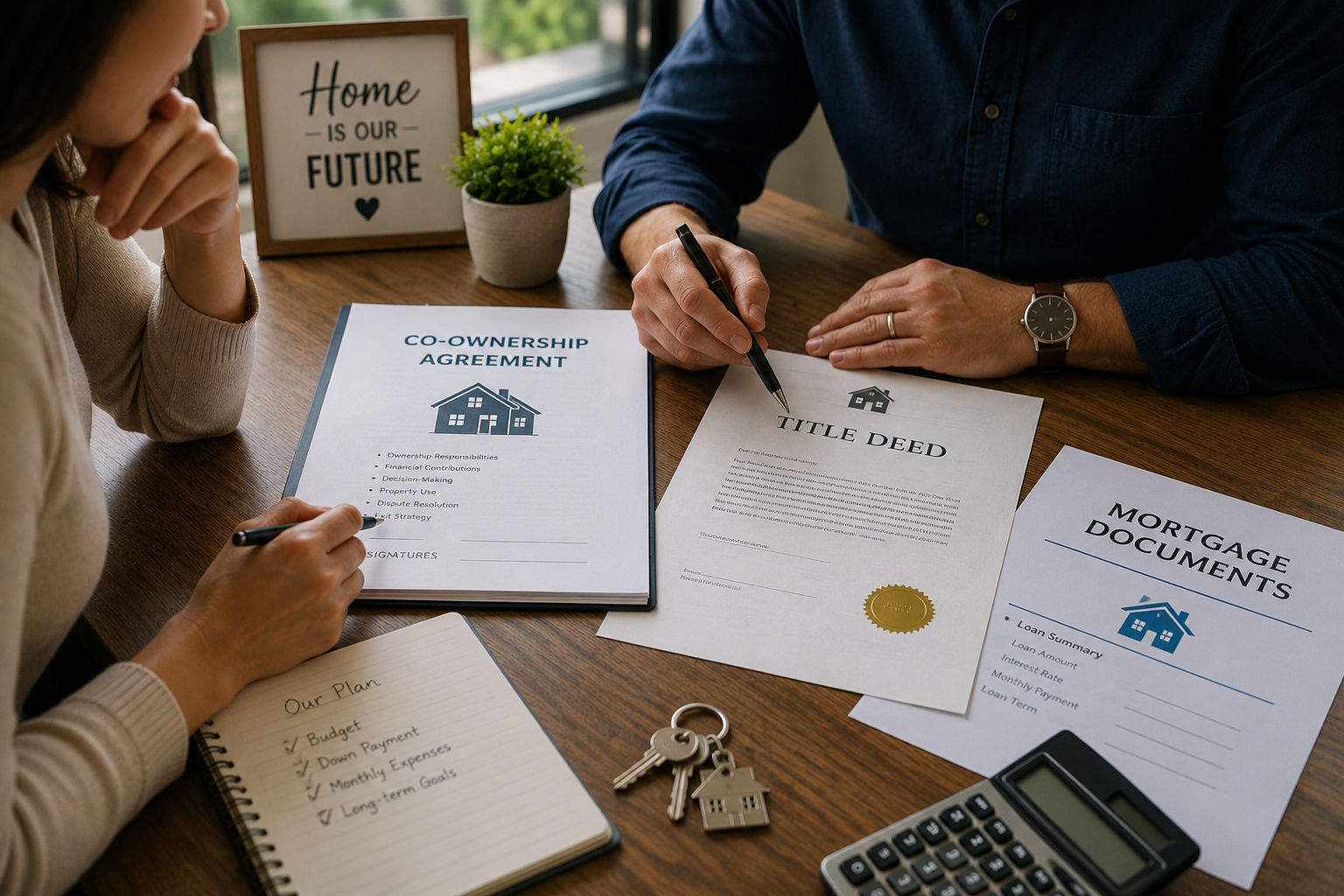
You've been looking at homes for months. Your sister offers to go in with you. Or your partner says let's do this together. Or a parent says, I'll help you qualify. Or a friend says we should buy a rental property. Suddenly that home you couldn't afford alone becomes possible. Co-owning property can absolutely be a smart move. It can get you into a home sooner, help you build equity faster, and turn a “ maybe someday ” into “ We're doing this! I've seen it work beautifully for hundreds of families over the years. But I've also seen it go sideways. Not because people had bad intentions, but because they skipped the hard conversations and left the details to chance. When co-ownership isn't structured right from the start, it doesn't just cause tension. It can turn into an expensive, exhausting legal mess that takes years to untangle. Here's what you need to know before you sign anything.
Futuristic analytics dashboard with circular center gauge and floating data charts on blue background
By Jennifer Hernandez July 31, 2026
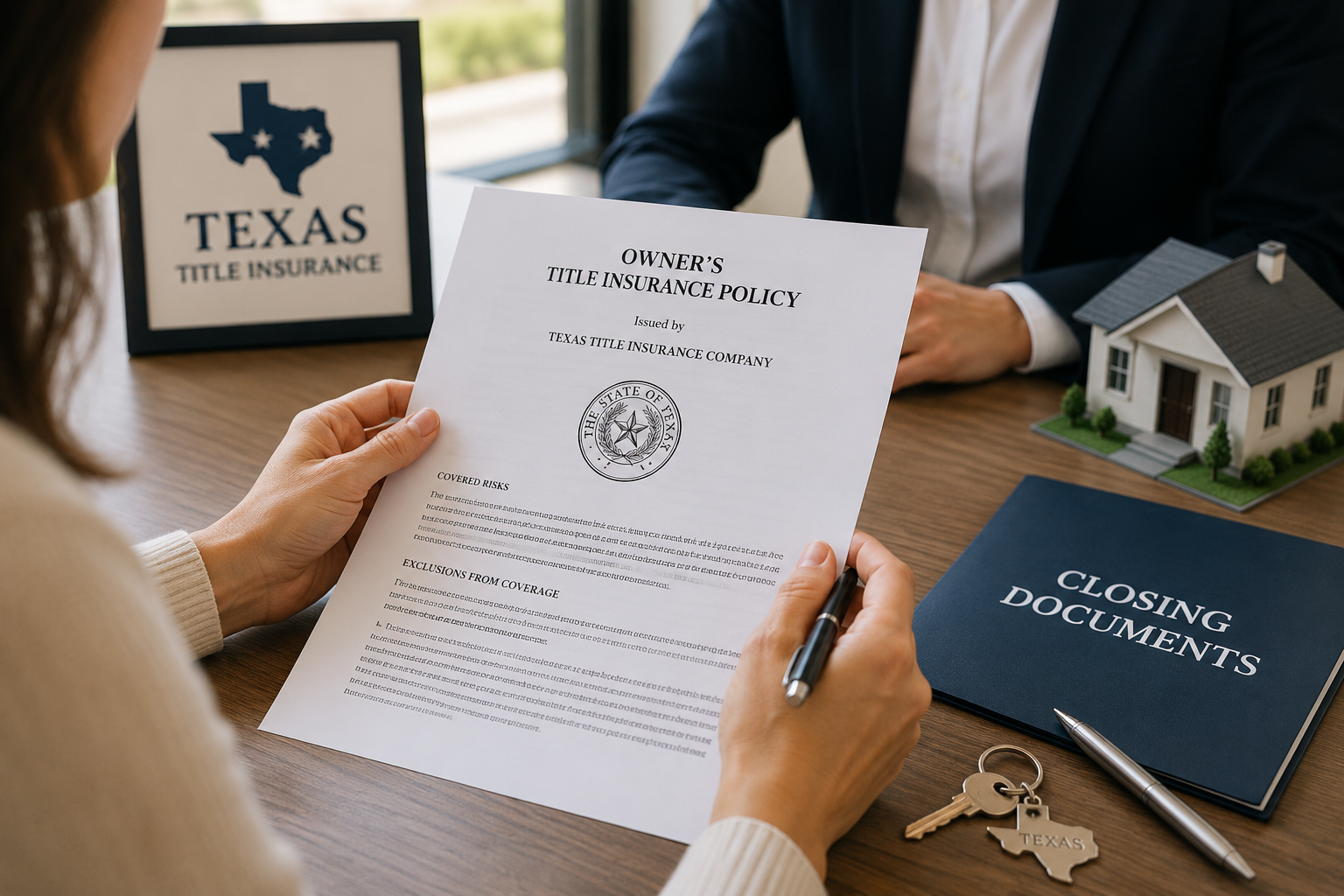
Title insurance in Texas explained by a loan officer with 30 years' experience: what it protects, why rates are state-set, and who pays at closing.
An empty nest couple reviewing paperwork for downsizing in Houston to a smaller home
By Jennifer Hernandez July 24, 2026
Texas seniors can now exempt up to $200,000 from school taxes and transfer their tax freeze to a new home. Before buying a townhome or 55+ condo, ask these three HOA questions. Get smart downsizing tips from Houston loan officer Jen Hughes Hernandez.
Desk with credit report, mortgage approval folder, calculator, and bill reminders showing finances and debt management
By Jennifer Hernandez July 20, 2026
Learn how collections impact your home buying journey. Get tips to navigate credit issues and secure your mortgage today!
By Jennifer Hernandez July 17, 2026
If you're a first-time homebuyer in Houston, you've probably felt that sinking feeling when you calculate how much cash you'll need upfront. Between the down payment, closing costs, and reserves, it can feel like you need tens of thousands of dollars just to get your foot in the door. But here's what many Houston homebuyers don't realize: there are numerous programs designed specifically to help with these upfront costs—and you might qualify for more help than you think. The problem isn't that assistance doesn't exist. The real issue is that most people simply don't know what's available or what questions to ask their lender. I've worked with countless Houston homebuyers who were genuinely surprised to discover they had options they never knew existed. That's exactly why it's so important to explore every possibility before you assume homeownership is out of reach. In this post, we'll walk through the types of assistance programs available to Houston first-time buyers, why so many people miss out on them, and how to make sure you're not leaving money on the table. Why Most Homebuyers Miss Out on Closing Cost Assistance Here's a scenario that plays out all too often: Someone decides they want to buy a home in Houston. They talk to a lender, get pre-approved, and then start house hunting. But when it comes time to discuss the actual costs to close, they're overwhelmed by the numbers and assume they just need to save more money. What they don't realize is that their lender might not have mentioned—or they might not have asked about—assistance programs that could cover thousands of dollars in upfront costs. The challenge isn't just a lack of programs. It's a lack of awareness. Many buyers simply don't know what questions to ask, and unfortunately, not every loan officer takes the time to explore every option with their clients. That's why working with a knowledgeable Houston mortgage professional who actively looks for ways to help you is so valuable. Types of Closing Cost Assistance Available in Houston Houston first-time homebuyers have access to several types of assistance programs, and the good news is that you might qualify for more than one. Here's what's out there: Down Payment Assistance Programs These programs can provide grants or low-interest loans to cover part or all of your down payment. Some are specific to Texas, while others are available through federal programs. The Texas State Affordable Housing Corporation (TSAHC) and the Texas Department of Housing and Community Affairs (TDHCA) both offer programs that Houston buyers can access. Closing Cost Grants Beyond down payment help, many programs also assist with closing costs—the fees you pay to finalize your mortgage. These can include appraisal fees, title insurance, origination fees, and more. Grants don't need to be repaid, making them especially valuable. Seller Concessions In some market conditions, you can negotiate for the seller to cover a portion of your closing costs. This isn't a formal "program," but it's a strategy that can save you thousands when structured correctly. Employer Assistance Programs Some major Houston employers, including hospitals, universities, and corporations, offer homebuyer assistance as an employee benefit. It's worth checking with your HR department to see if this perk exists at your company. What You Should Ask Your Lender Don't wait for your lender to bring up assistance programs—take the initiative. Here are the key questions you should ask: "What down payment assistance programs am I eligible for based on my income and the home price I'm targeting?" "Are there any grants available that don't need to be repaid?" "Can I combine multiple assistance programs?" "What are the requirements or restrictions if I use these programs?" Remember, not all lenders are equally knowledgeable about every program available. If your lender seems unsure or dismissive, that might be a sign you need to work with someone who specializes in helping first-time buyers navigate these options. Don't Count Yourself Out Too Soon One of the biggest mistakes Houston homebuyers make is assuming they don't qualify for help before they even apply. Income limits for assistance programs are often higher than people expect, and there are programs designed for moderate-income buyers, not just those in financial hardship. The only way to know what you qualify for is to actually explore your options. That means having detailed conversations with your lender, doing your own research, and being willing to ask questions even if they feel basic. This is your financial future—there's no such thing as a dumb question
By Jennifer Hernandez July 14, 2026
If you're a renter in Houston scrolling through Zillow on a Saturday morning, dreaming about having your own backyard or a place where you can finally paint the walls, you've probably caught yourself thinking: "I'm just not ready yet." Maybe you think you need a bigger down payment, a perfect credit score, or another year of savings. But here's what most first-time homebuyers don't realize—waiting for the "perfect" moment often means missing out on the right moment. The truth is, you might be closer to homeownership than you think. If you have steady income, you've started saving (even if it's not a huge amount), and you're seriously considering buying a home within the next year, you could already qualify. The biggest mistake isn't being unprepared—it's convincing yourself you're not ready when you actually are. In this post, we'll break down the real signs that you're ready to buy a home in Houston, why waiting can actually cost you more, and how to take the first step without second-guessing yourself Why First-Time Buyers in Houston Think They're Not Ready The "Someday" Trap Many renters in Houston fall into what I call the "someday" trap. Someday I'll have 20% down. Someday my credit will be perfect. Someday I'll feel completely confident. The problem? Someday keeps getting pushed further away while home prices and rent keep climbing. Houston's real estate market has shown consistent growth over the years, and waiting for the perfect conditions often means paying more later—both in home prices and in the rent you're spending while you wait. Myths That Keep You Waiting Let's clear up some common misconceptions. You don't need a 20% down payment (many first-time buyer programs require as little as 3-5%). You don't need perfect credit (though good credit certainly helps with interest rates). And you don't need to have everything figured out before you start the conversation with a mortgage professional. The Real Signs You're Ready to Buy a Home You Have Stable Income If you've been employed consistently and your income is reliable, you're checking one of the most important boxes. Lenders want to see that you can make your mortgage payments, and a steady job history shows exactly that. In Houston's diverse economy—from the Medical Center to the Energy Corridor—stable employment is often more achievable than first-time buyers realize. You've Started Saving Money Notice I didn't say "you've saved $50,000." If you've been consistently setting aside money, even if it's a few hundred dollars a month, you've developed the financial discipline that homeownership requires. Plus, there are down payment assistance programs available to Houston buyers that can help bridge the gap between what you've saved and what you need. You're Thinking Seriously About the Next Year Here's the key indicator: if buying a home has moved from a vague "someday" dream to something you're actively researching and thinking about for the next 6-12 months, that mindset shift matters. It means you're mentally and emotionally moving toward readiness, and that's often when it makes sense to have a real conversation about your options. Why Making a Plan Beats Waiting Knowledge Replaces Fear Most people wait because they don't know what they don't know. The home buying process feels mysterious and overwhelming. But once you sit down with a knowledgeable mortgage professional and create an actual plan, that fear transforms into clarity. You'll learn exactly what you qualify for, what you need to work on, and what timeline makes sense for your situation. Time Is Working Against You Every month you wait is a month you're paying someone else's mortgage through rent instead of building your own equity. In Houston neighborhoods from the Heights to Pearland, home values have historically appreciated over time, meaning earlier buyers have benefited from that growth. You Can Start Where You Are You don't have to be perfect to start the process. Maybe you'll learn you could buy now, or maybe you'll discover you need another six months to improve your credit score or save a bit more. Either way, you'll have a roadmap instead of just hoping you'll somehow feel "ready" eventually
By Jennifer Hernandez July 10, 2026
If you bought your Houston home before 2022, you're likely sitting on a goldmine of equity—and you might be wondering how to tap into it without touching that beautiful 2%, 3%, or 4% mortgage rate you locked in. Maybe you're thinking about home improvements, consolidating high-interest debt, or building a financial cushion for your next move. Whatever your reason, you're not alone. More Houston homeowners than ever are exploring ways to access their home equity while keeping their low-rate first mortgage intact.  The good news? You have options. The two most popular are HELOCs (Home Equity Lines of Credit) and home equity loans—and while they sound similar, they work very differently. In this post, I'll break down what each one is, how they work, and which might be the better fit for your financial goals. No jargon, no runaround—just the facts you need to make a smart decision.
realtor providing the easiest way to buy a house
By Jennifer Hernandez July 29, 2025
Buying a house is a big process and if you don't use a Realtor, you are missing out on expertise that can save you thousands of dollars and hundreds of hours.
More Posts